
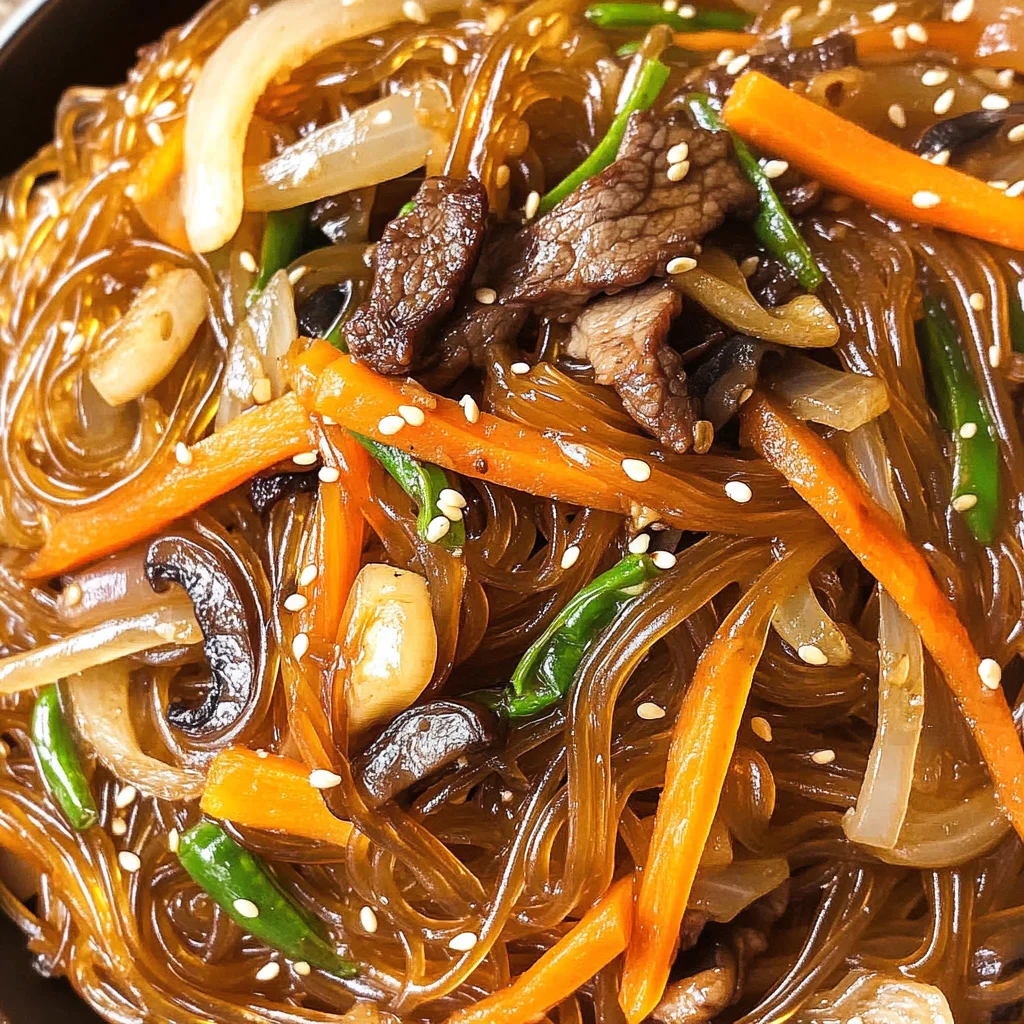
Japchae (Korean Glass Noodle Stir Fry) is a delightful dish that combines chewy sweet potato glass noodles with a medley of colorful vegetables and optional meat. This versatile meal shines during special occasions but is also perfect for a weeknight dinner. With its unique flavor profile and inviting texture, Japchae is sure to impress anyone at your table.
Why You’ll Love This Recipe
- Delicious Flavor: The combination of savory soy sauce, sweet honey, and nutty sesame oil creates an irresistible taste.
- Easy to Prepare: With simple steps and common ingredients, you can whip up this dish in about 30 minutes.
- Versatile Meal: Serve it as a main dish or a side; it’s great for any occasion!
- Healthy Ingredients: Packed with vegetables, this dish provides essential nutrients while being low in calories.
- Customizable: Feel free to swap in your favorite proteins or veggies based on what you have.
Tools and Preparation
To make Japchae, you’ll need some basic kitchen tools that will help you prepare the ingredients efficiently.
Essential Tools and Equipment
- Nonstick pan
- Large pot
- Mixing bowl
- Kitchen shears (optional)
- Cooking utensil
Importance of Each Tool
- Nonstick pan: Prevents sticking when cooking eggs or sautéing veggies, making cleanup easy.
- Large pot: Essential for boiling the glass noodles without overcrowding them.
- Mixing bowl: Helps combine all ingredients evenly before serving.
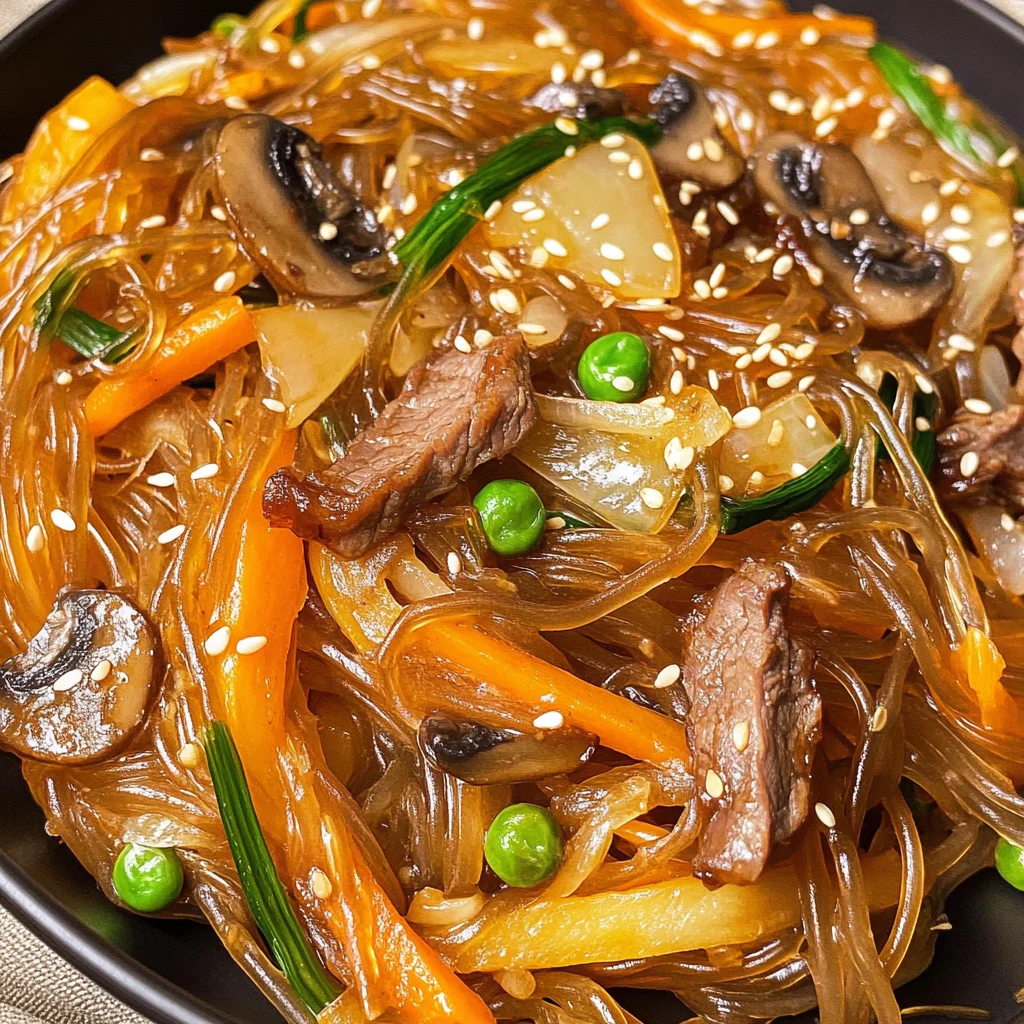
Ingredients
For the Noodles and Protein
- 12 ounces sweet potato glass noodles
- 16 ounces beef (cut into strips)
For the Vegetables
- 2 large eggs (beaten)
- 1 large carrot (peeled and julienned)
- 1 medium yellow onion (thinly sliced)
- 3 mushrooms (thinly sliced)
- 2 cups baby spinach (packed)
- 2 stalks green onion (cut into 1 inch pieces)
For the Seasoning
- Oil (for cooking)
- Toasted sesame seeds (optional for garnish)
- Salt and black pepper (as needed)
- 7 tablespoons soy sauce (light sodium)
- 3 tablespoons honey
- 2 tablespoons brown sugar
- 2 tablespoons toasted sesame oil
How to Make Japchae (Korean Glass Noodle Stir Fry)
Step 1: Make the Japchae Sauce
In a mixing bowl, combine soy sauce, honey, brown sugar, and toasted sesame oil. Whisk until the sugar is dissolved.
Step 2: Cook the Japchae Noodles
Boil water in a large pot. Add the sweet potato glass noodles and cook for 10-15 minutes until tender. Stir occasionally to prevent sticking.
Step 3: Drain and Rinse Noodles
Once cooked, drain the noodles immediately. Rinse them with cold water until cool and set aside. Optionally, cut them into shorter pieces for easier eating.
Step 4: Make the Egg Crepe
Heat a small amount of oil in a nonstick pan over medium heat. Pour in beaten eggs, tilting to form a thin layer. Cook until set, then flip briefly. Remove from heat and let cool before cutting into thin strips.
Step 5: Cook the Beef
In the same pan over medium-high heat, add more oil if needed. Sear the beef strips lightly seasoned with salt and pepper for about 4-5 minutes until golden brown. Remove from pan and set aside.
Step 6: Sauté the Vegetables
Using the same pan on medium heat, add oil again if necessary. Start by sautéing carrots for about 30 seconds; then add onions followed by mushrooms, spinach, and green onion tops until all are tender.
Step 7: Assemble the Japchae
In the large pan or stir fry pan over medium heat, add your prepared japchae sauce. Stir occasionally until bubbling. Then reduce heat to low.
Step 8: Combine Everything Together
Add cooked noodles to the sauce and mix well until coated evenly. Include all other prepared ingredients—vegetables, beef, and egg strips—and toss gently to combine thoroughly.
Step 9: Serve Your Dish
Portion out your japchae or serve it family-style with a sprinkle of toasted sesame seeds on top. Enjoy hot or at room temperature!
How to Serve Japchae (Korean Glass Noodle Stir Fry)
Japchae is a versatile dish that can be enjoyed in various ways. Whether you choose to present it as a main course or as part of a larger meal, the serving options are plentiful and delightful.
Family Style
- Serve the japchae in a large bowl at the center of the table for everyone to help themselves. This creates a communal dining experience.
Individual Portions
- Plate the japchae in smaller bowls for each guest. This allows for easy serving and adds a touch of elegance to your meal.
Garnished with Sesame Seeds
- Sprinkle toasted sesame seeds on top before serving. This adds a nutty flavor and enhances the visual appeal.
With Fresh Herbs
- Add fresh cilantro or green onions on top for added freshness and color. It brightens up the dish and complements its flavors.
Accompanied by Kimchi
- Serve alongside a small bowl of kimchi for an authentic Korean experience. The tangy, spicy flavor of kimchi pairs perfectly with the sweetness of japchae.
As Part of a Bento Box
- Include japchae in a bento box with other side dishes, like pickled vegetables or rice. This makes for a balanced and visually appealing meal.
How to Perfect Japchae (Korean Glass Noodle Stir Fry)
Perfecting japchae takes practice, but these tips will help elevate your dish to restaurant quality.
- Use Fresh Ingredients: Fresh vegetables provide better flavor and texture compared to frozen ones.
- Cook Noodles Al Dente: Ensure your sweet potato noodles are cooked just right; they should be chewy but not mushy.
- Sear Meat Properly: Searing beef until golden brown enhances its flavor and texture, making it more enjoyable.
- Control Heat When Sautéing: Adjust heat levels when cooking vegetables to avoid overcooking; they should remain crisp-tender.
- Mix Sauce Thoroughly: Make sure your sauce is mixed well before adding it to the noodles to ensure even flavor distribution.
- Serve Immediately: Japchae tastes best when served fresh; reheating can alter its texture.
Best Side Dishes for Japchae (Korean Glass Noodle Stir Fry)
Pairing japchae with complementary side dishes can enhance your meal’s overall experience. Here are some great options:
- Kimchi: A classic Korean side dish that adds spice and tang, balancing out the sweetness of japchae.
- Pickled Radish: Crunchy and slightly sweet, pickled radish provides a refreshing contrast that cleanses the palate.
- Korean Potato Salad: Creamy and mildly sweet, this salad offers a comforting side that pairs well with savory dishes.
- Steamed Broccoli: Lightly steamed broccoli adds color and nutrients without overpowering the flavors of japchae.
- Spicy Cucumber Salad: The coolness of cucumbers combined with spicy seasoning creates an exciting taste sensation alongside japchae.
- Grilled Tofu Skewers: Marinated tofu skewers bring protein to your meal while complementing the noodle dish nicely.
- Sesame Spinach Salad: This refreshing salad made with spinach dressed in sesame oil provides additional greens while enhancing Asian flavors.
- Rice Cakes (Tteok): Chewy rice cakes can be served alongside for an extra dose of texture, making your meal more filling.
Common Mistakes to Avoid
When making Japchae, it’s easy to make a few common mistakes that can impact the final dish. Here are some tips to ensure your stir fry turns out perfectly.
- Skipping the sauce preparation: Failing to mix the sauce ingredients before adding them can lead to uneven flavor. Always prepare and set aside the sauce first for a balanced taste.
- Overcooking the noodles: Boiling the sweet potato noodles for too long will make them mushy. Cook them just until they’re tender, usually about 10-15 minutes, then rinse immediately.
- Not seasoning vegetables properly: Neglecting to season your veggies while cooking can result in bland flavors. Lightly sprinkle salt and black pepper during sautéing for enhanced taste.
- Crowding the pan: Adding too many ingredients at once may cause steaming rather than frying. Work in batches if necessary to achieve that delicious stir-fried finish.
- Ignoring the order of cooking: Cooking harder vegetables first ensures everything cooks evenly. Start with carrots and onions before adding softer veggies like mushrooms and spinach.
- Inadequate cooling of egg crepe: If you don’t let the egg crepe cool enough before cutting, it will be difficult to handle. Allow it to cool until comfortable before slicing.
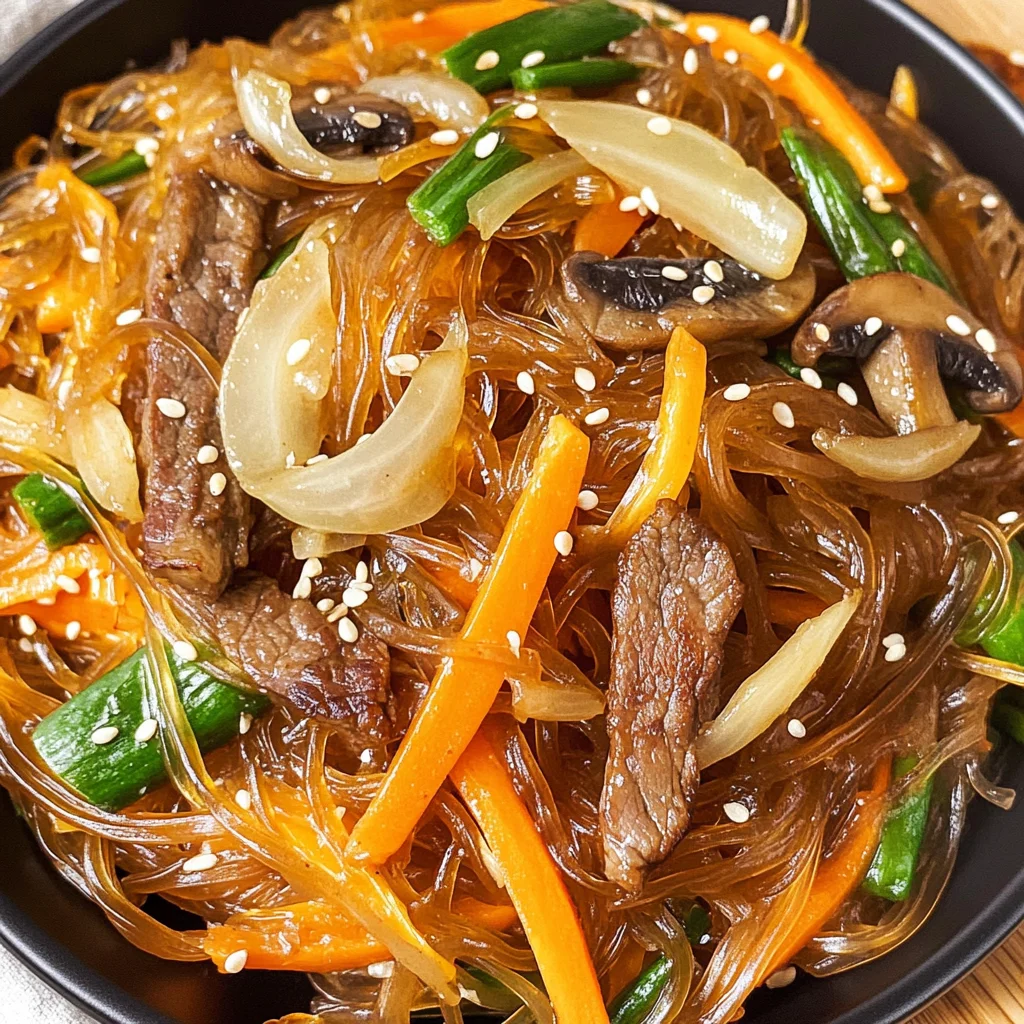
Storage & Reheating Instructions
Refrigerator Storage
- Store leftover Japchae in an airtight container.
- It can be kept in the fridge for up to 3 days.
Freezing Japchae (Korean Glass Noodle Stir Fry)
- Place cooled Japchae in a freezer-safe container or bag.
- Freeze for up to 2 months for best quality.
Reheating Japchae (Korean Glass Noodle Stir Fry)
- Oven: Preheat to 350°F (175°C) and bake covered for about 15 minutes until heated through.
- Microwave: Heat in short bursts of 1-2 minutes, stirring in between until hot.
- Stovetop: Sauté on medium heat with a splash of water or oil, stirring occasionally until warmed.
Frequently Asked Questions
Here are some common questions about making Japchae and its variations.
What is Japchae (Korean Glass Noodle Stir Fry)?
Japchae is a popular Korean dish made with sweet potato glass noodles, vegetables, and optionally meat stir-fried together with a flavorful sauce.
Can I make Japchae without meat?
Absolutely! You can skip meat altogether or substitute it with tofu or additional vegetables for a plant-based version.
How do I customize my Japchae?
Feel free to add your favorite vegetables like bell peppers or zucchini. You can also adjust the sweetness by modifying honey or sugar amounts in the sauce.
Is Japchae gluten-free?
Yes, if you use gluten-free soy sauce or tamari instead of regular soy sauce, this dish can be made gluten-free.
How do I store leftover Japchae?
Store leftover Japchae in an airtight container in the refrigerator for up to 3 days or freeze it for up to 2 months.
Final Thoughts
Japchae is not only a delicious dish but also highly versatile. You can easily customize it based on your preferences by altering ingredients or adjusting flavors. Whether served warm or chilled, it’s perfect as a main course or side dish. Give this recipe a try and enjoy a taste of Korean cuisine!
Japchae (Korean Glass Noodle Stir Fry)
Japchae, a classic Korean glass noodle stir fry, is a flavorful and colorful dish that combines chewy sweet potato noodles with an array of vibrant vegetables and tender beef. This delightful recipe is not only easy to prepare but also highly versatile, making it perfect for special occasions or a quick weeknight dinner. With its unique blend of savory soy sauce, sweet honey, and nutty sesame oil, Japchae is sure to impress your family and friends. Plus, it’s easily customizable; feel free to swap in your favorite proteins or veggies based on what you have on hand. Enjoy this nourishing dish hot or at room temperature!
- Total Time: 45 minutes
- Yield: Serves approximately 4 people 1x
Ingredients
- 12 ounces sweet potato glass noodles
- 16 ounces beef (cut into strips)
- 2 large eggs (beaten)
- 1 large carrot (peeled and julienned)
- 1 medium yellow onion (thinly sliced)
- 3 mushrooms (thinly sliced)
- 2 cups baby spinach
- 2 stalks green onion (cut into 1-inch pieces)
- 7 tablespoons soy sauce (light sodium)
- 3 tablespoons honey
- 2 tablespoons brown sugar
- 2 tablespoons toasted sesame oil
- Oil (for cooking)
- Salt and black pepper (as needed)
- Toasted sesame seeds (optional for garnish)
Instructions
- Make the Japchae sauce by whisking together soy sauce, honey, brown sugar, and sesame oil in a mixing bowl.
- Boil water in a large pot and cook the sweet potato glass noodles for 10-15 minutes until tender. Drain and rinse with cold water.
- In a nonstick pan, cook beaten eggs to form an egg crepe; set aside and slice into thin strips.
- Sear beef strips in the same pan until golden brown; remove and set aside.
- Sauté carrots, onions, mushrooms, spinach, and green onions until tender.
- Combine noodles with the prepared sauce in a large pan over medium heat. Add beef, vegetables, and egg strips; toss gently to mix.
- Serve hot or at room temperature.
- Prep Time: 15 minutes
- Cook Time: 30 minutes
- Category: Main
- Method: Stir-frying
- Cuisine: Korean
Nutrition
- Serving Size: 1 cup (approximately 250g)
- Calories: 350
- Sugar: 10g
- Sodium: 600mg
- Fat: 9g
- Saturated Fat: 2g
- Unsaturated Fat: 6g
- Trans Fat: 0g
- Carbohydrates: 54g
- Fiber: 4g
- Protein: 18g
- Cholesterol: 70mg
Keywords: Use fresh ingredients for the best flavor and texture. Adjust the sweetness of the sauce by modifying the amount of honey or sugar. For a vegetarian option, replace beef with tofu or additional vegetables.